

2025 Impact Report
15 YEARS OF POSITIVITY IN MOTION
Program Overview
Mission
Empowering Upper Valley youth through free afterschool running programs, Finding Our Stride boosts fitness, self-esteem and resilience, and connects kids to peers, mentors and community.
Program Pillars
-
Fitness
We believe in the power of fitness to empower youth, regardless of their background or experience level. Our programs prioritize accessibility, inclusivity, and individual growth, providing a welcoming space for children to explore the joy of movement and develop lifelong habits of physical activity.
-
Social-Emotional Learning
FOS is a microcosm of the classroom for our coaches, 80% of whom are educators. Practice time provides increased connection that builds student confidence and resilience in and out of the classroom. Our SEL curriculum is grounded in positive psychology’s research on character and relationships
-
Community Engagement
Each season, teams and runners contribute meaningfully to their communities. This helps youth to foster self-esteem and resilience; build a sense of purpose and belonging; and develop a sense of agency and pride. Since 2016, FOS teams have raised more than $350,000 for Upper Valley non-profits.
Celebrating 15 Years of FOS
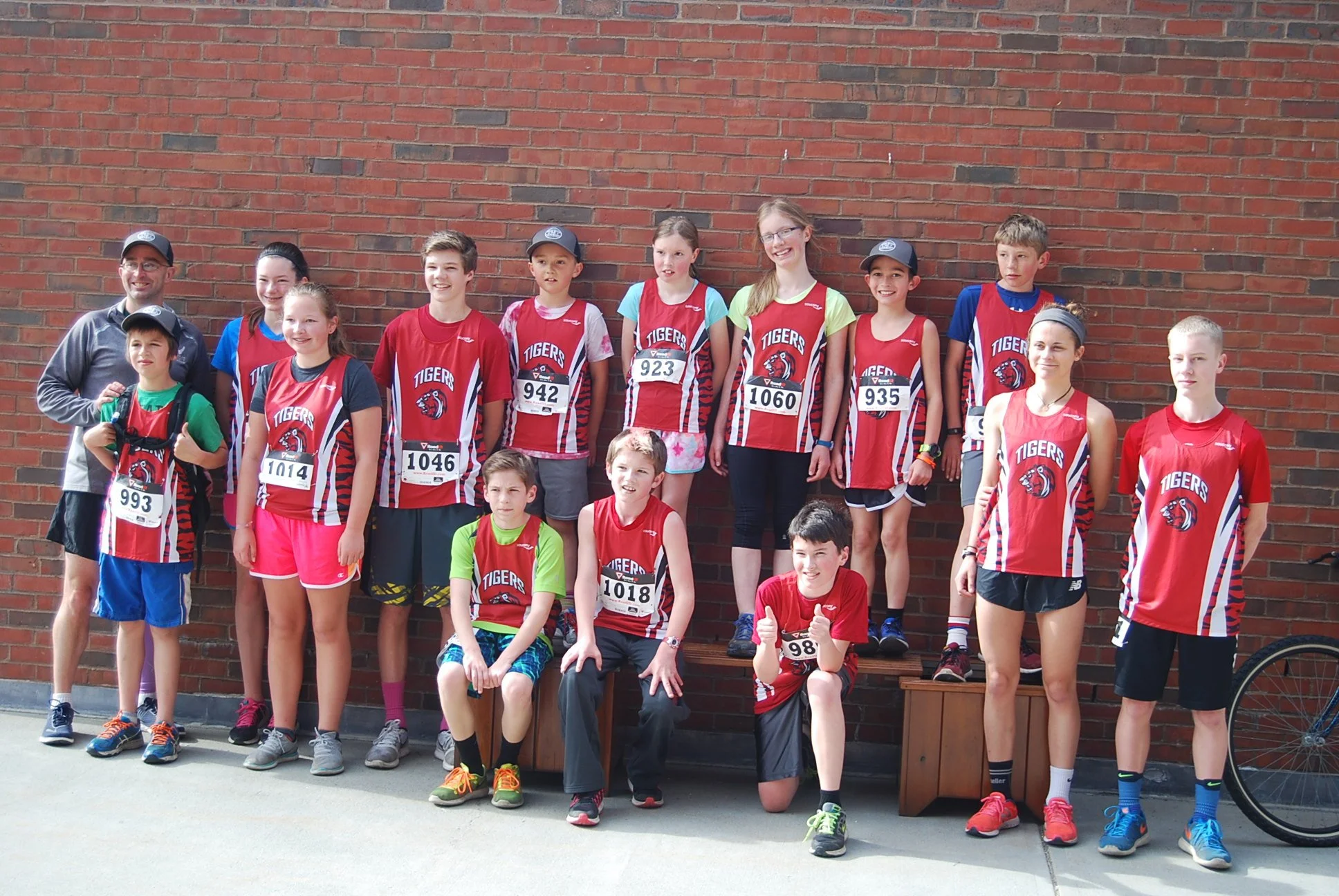
How It Started
First FOS Team: Indian River School, 2011
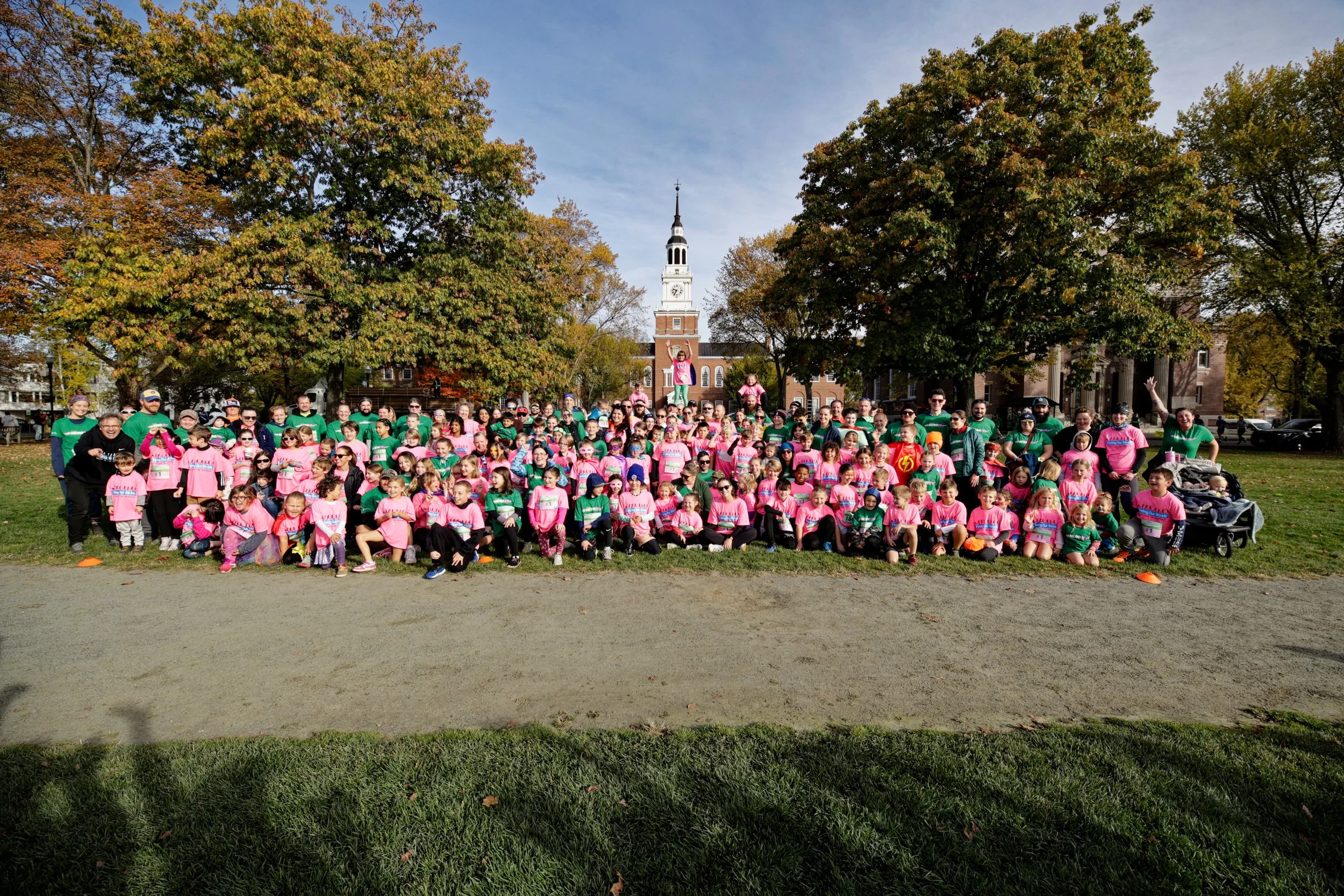
How It’s Going
CHaD Hero, 2025
2025 by the Numbers
Runners
1185
Coaches
120
School Partners
27
Communities
35
Letter From Our Executive Director
Dear Friends of Finding Our Stride,
15 years ago our founding director, Jenny Williams, saw an unmet need in our rural communities: inclusive, barrier-free programming where all youth have opportunities to thrive socially, emotionally, and physically. She partnered with Indian River School and soon Finding Our Stride was off and running.
The theory was simple: get kids outside, active, away from screens; give them a challenge; surround them with supportive peers and adults, and good things will happen. Add a purposeful dose of community engagement, and great things will happen.
As we expanded to support more schools, our coach-mentors – primarily educators in the very schools where they lead teams – joined us as true co-developers of the program. In partnership with school leaders and with the support of The Positivity Project, we integrated research-based social-emotional learning into our practice plans. Together we’ve designed a program that builds fitness, strengthens social-emotional health, and cultivates connection to community. These remain our guiding pillars.
In this report we highlight the research that informs our program design and the outcomes that reflect its impact. Finding Our Stride has grown significantly over the last 15 years. In 2025 we partnered with 27 schools, serving more than 1,100 students in grades K-8. We remain committed to inclusivity and access: the program is free to all participants, we provide healthy snacks at each practice, and our Sneaker Fund ensures runners have the footwear they need. Practices happen at school, immediately after school, eliminating transportation barriers for working families.
None of this happens without the support of individual donors, corporate sponsors, and private foundations. If you share our belief that investing in the well-being of children today strengthens our communities for decades to come, we invite you to join us. Together, we can help shape the next 15 years.
Happy running,
Greg DeFrancis
The Challenges Facing Youth Today
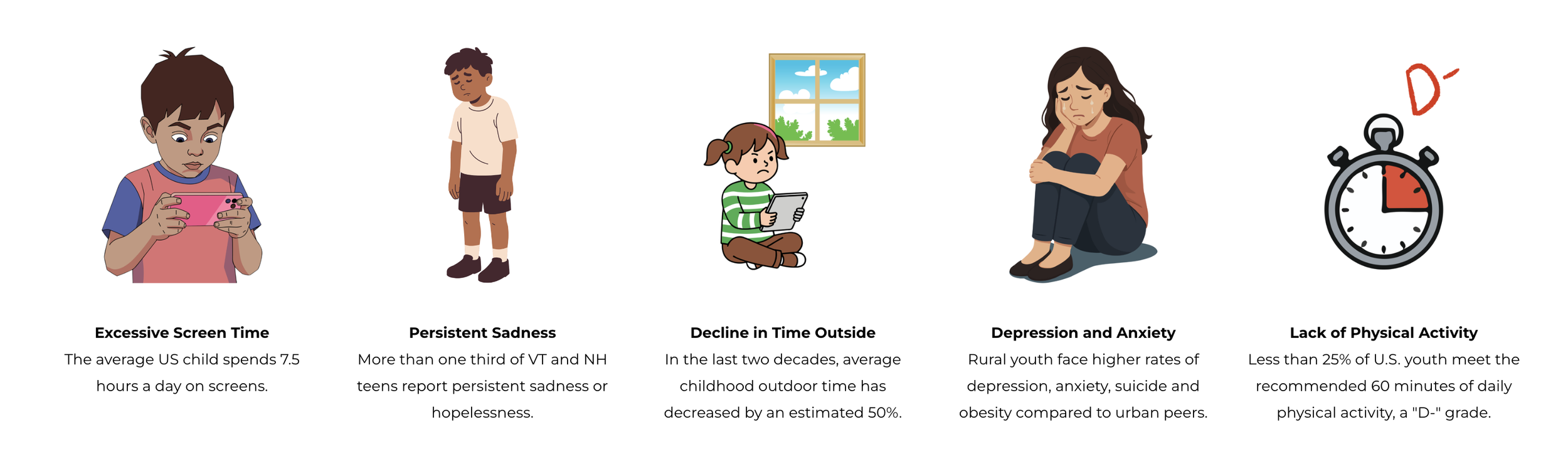
-
![]()
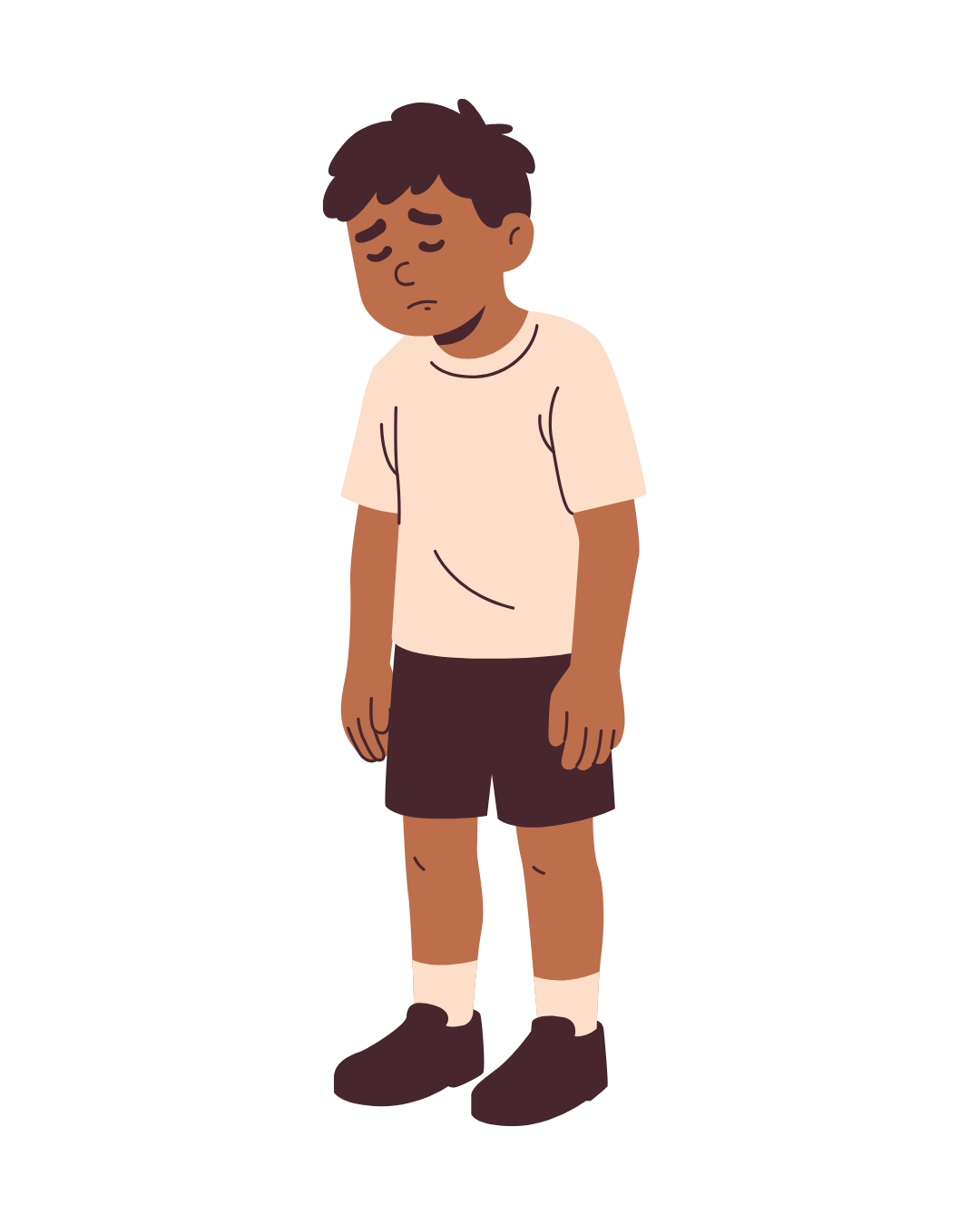
Persistent Sadness
More than one third of VT and NH teens report persistent sadness or hopelessness. -
![]()
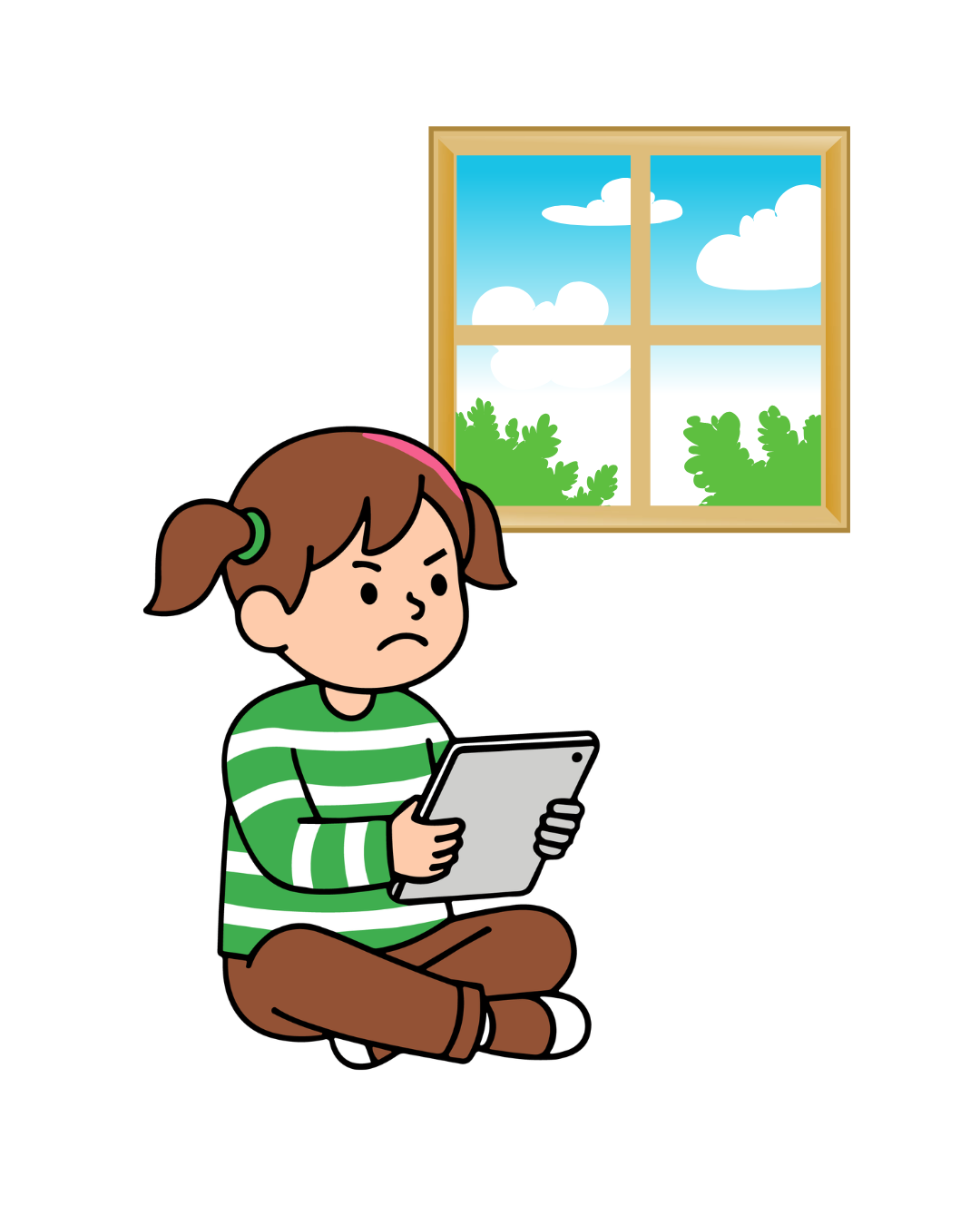
Decline in Time Outside
In the last two decades, average childhood outdoor time has decreased by an estimated 50%. -
![]()
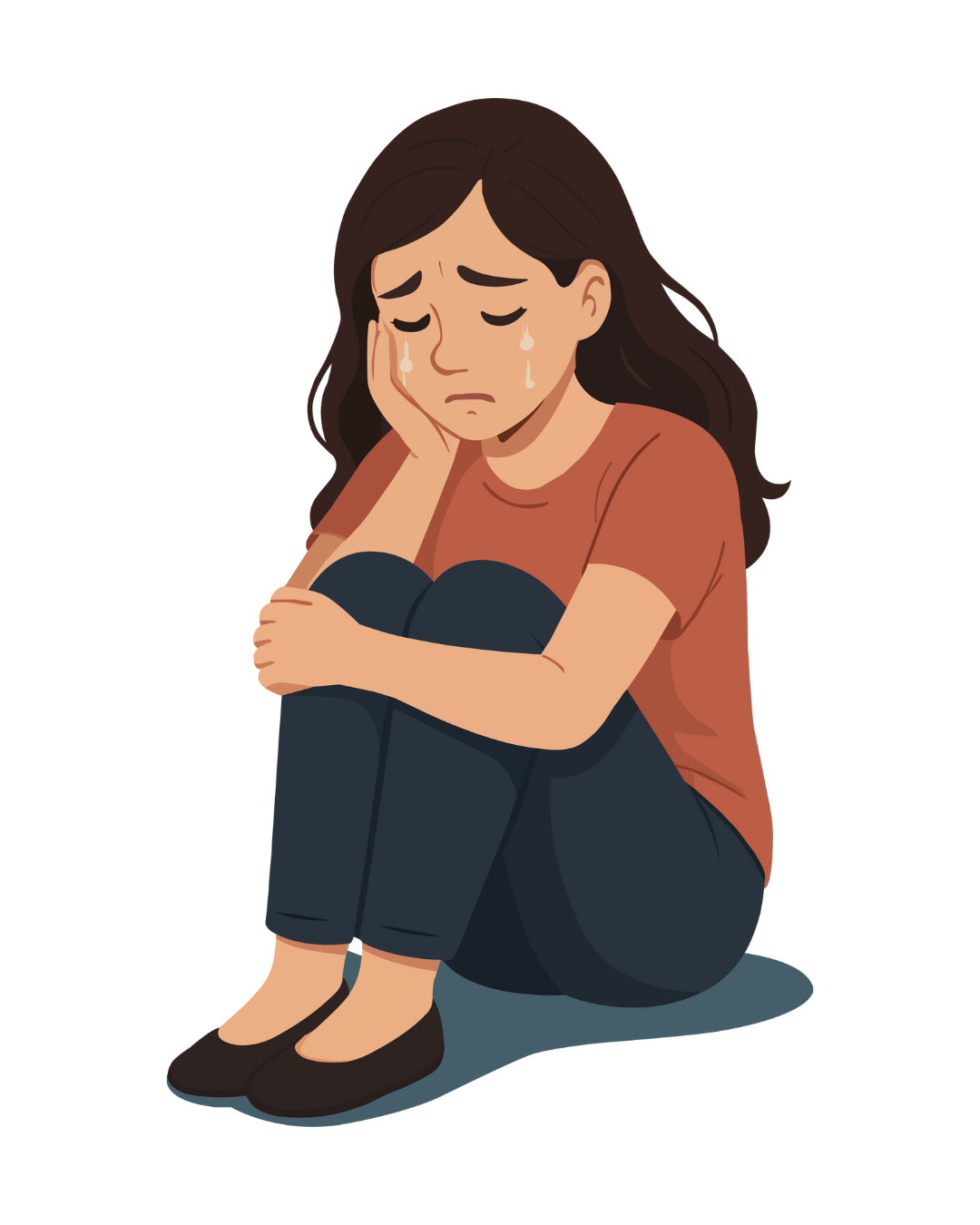
Depression and Anxiety
Rural youth face higher rates of depression, anxiety, suicide and obesity compared to urban peers. -
![]()
Lack of Physical Activity
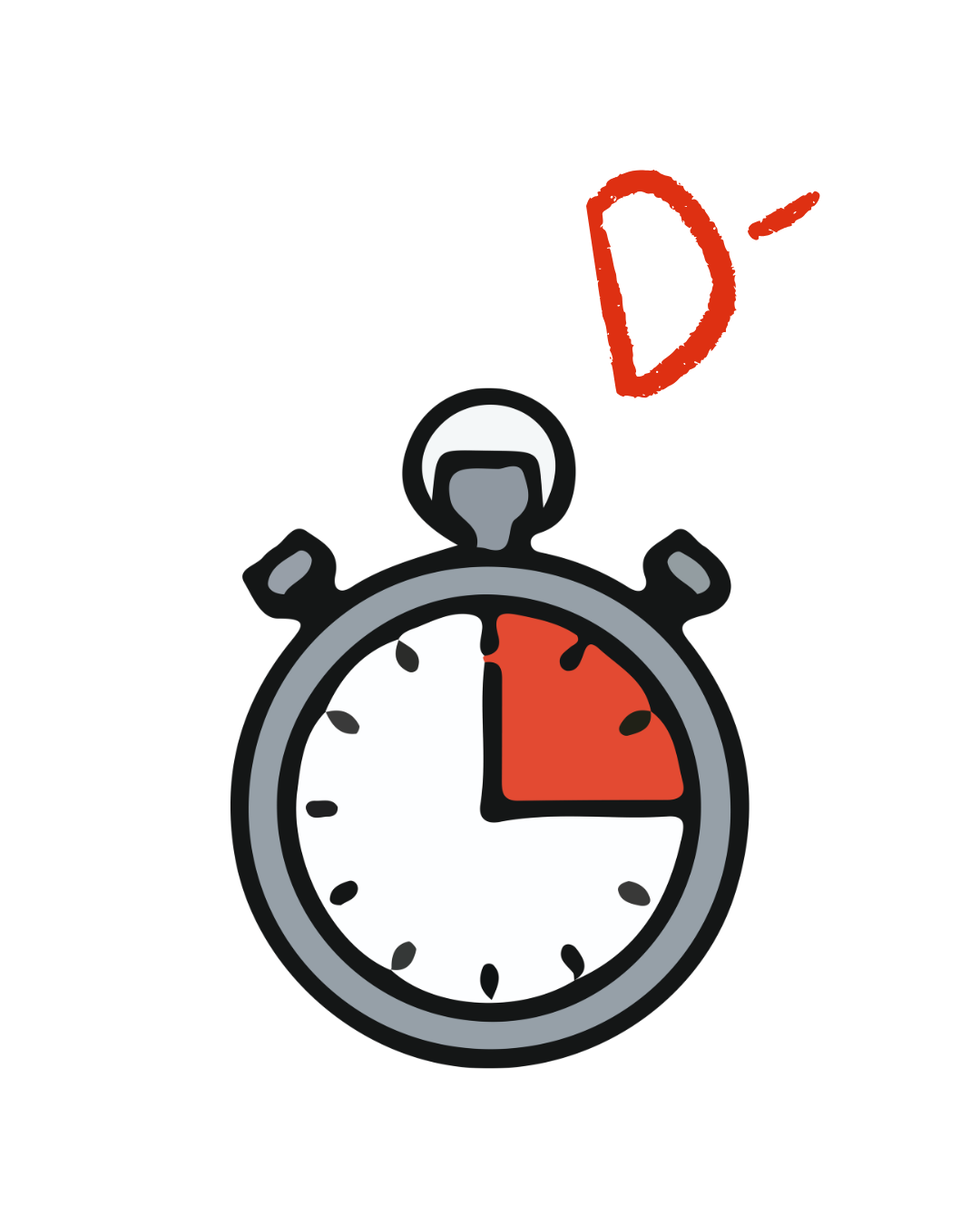
Less than 25% of U.S. youth meet the recommended 60 minutes of daily physical activity, a "D-" grade. -
![]()
Excessive Screen Time
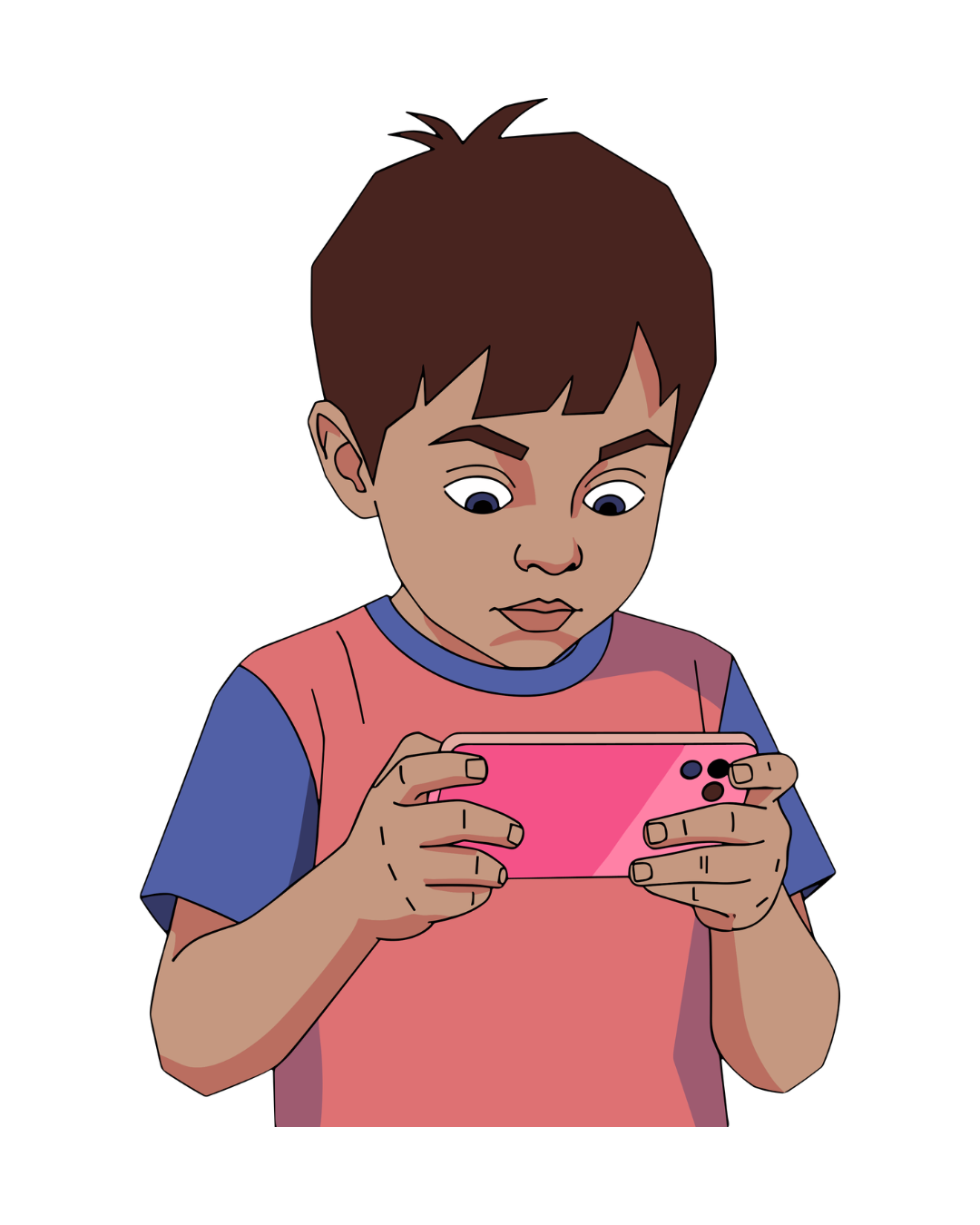
The average US child spends 7.5 hours a day on screens.
What Helps Young People Thrive
The 5 C’s of Positive Youth Development are a widely accepted framework for understanding how young people grow into capable, compassionate adults.
Developed by Richard Lerner and grounded in decades of developmental science, the model shows that when youth build these five strengths, a sixth C naturally follows: Contribution.
At Finding Our Stride, we intentionally design our program to develop all six, demonstrating a holistic youth development program.
-
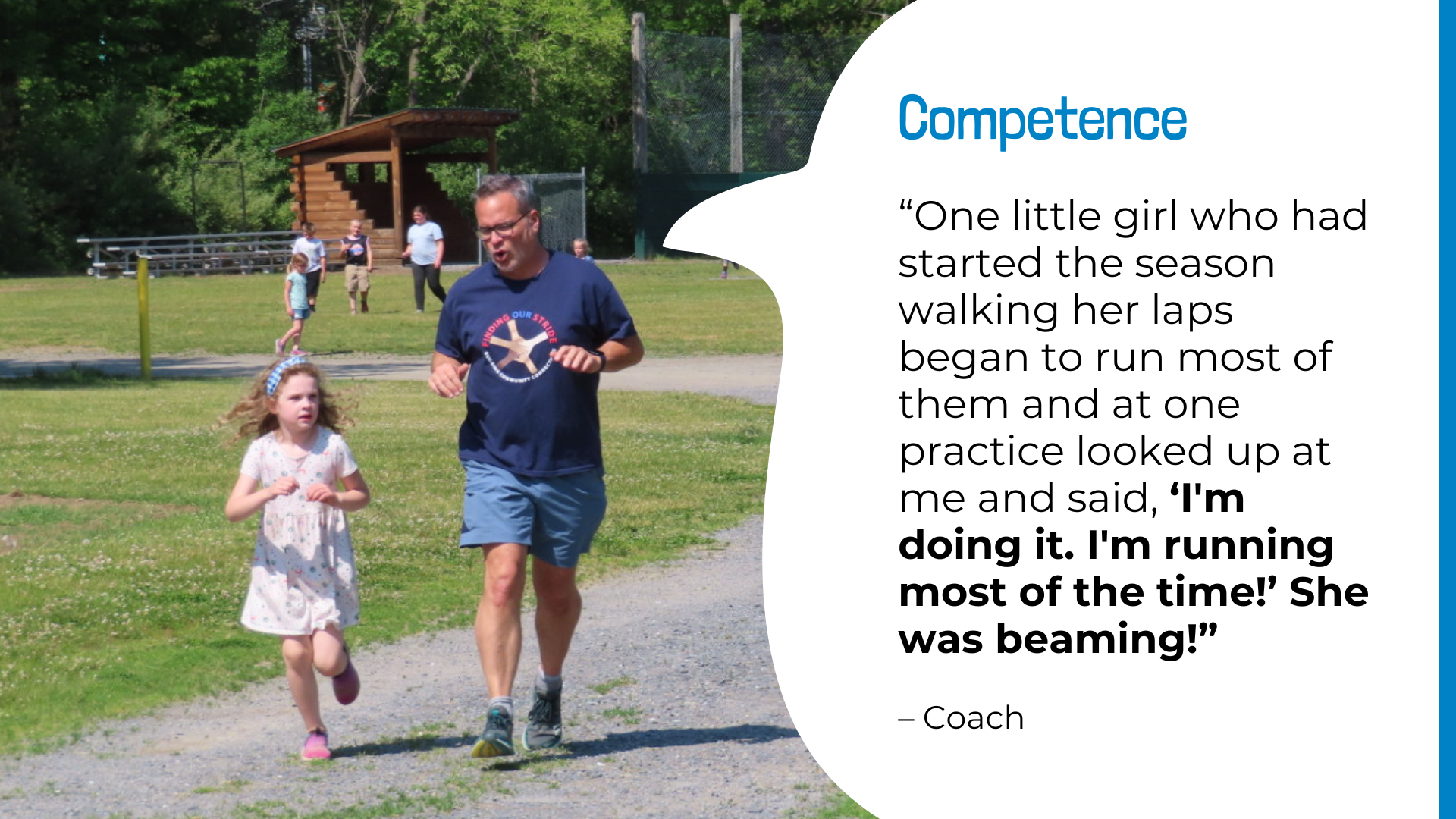
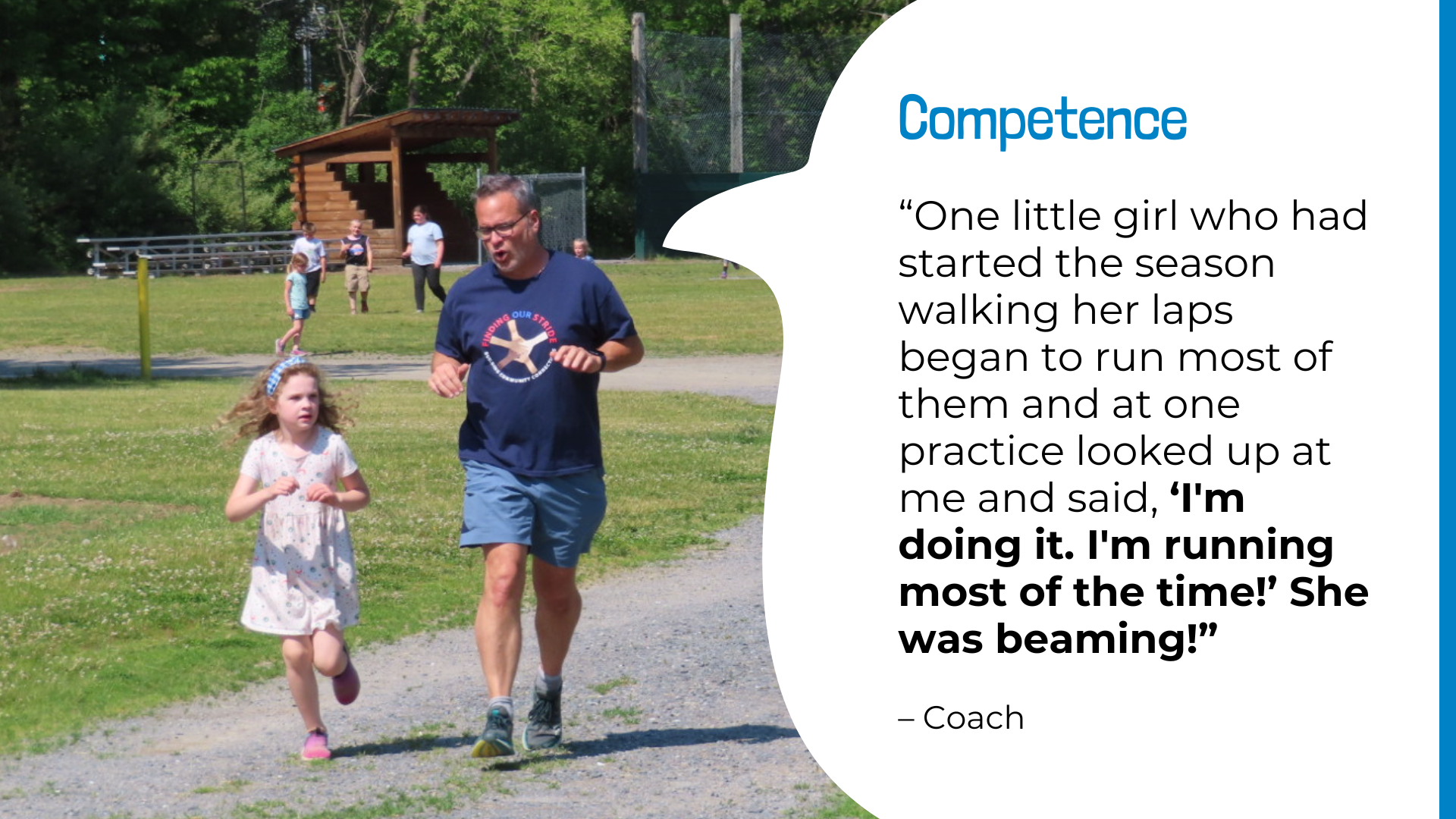
The ability to develop skills and see measurable progress in areas that matter. Competence grows when youth challenge themselves, practice consistently, and experience improvement over time.
-
A strong sense of self-worth and belief in one’s abilities. Confidence develops when young people feel supported, capable, and successful in meaningful pursuits.
-
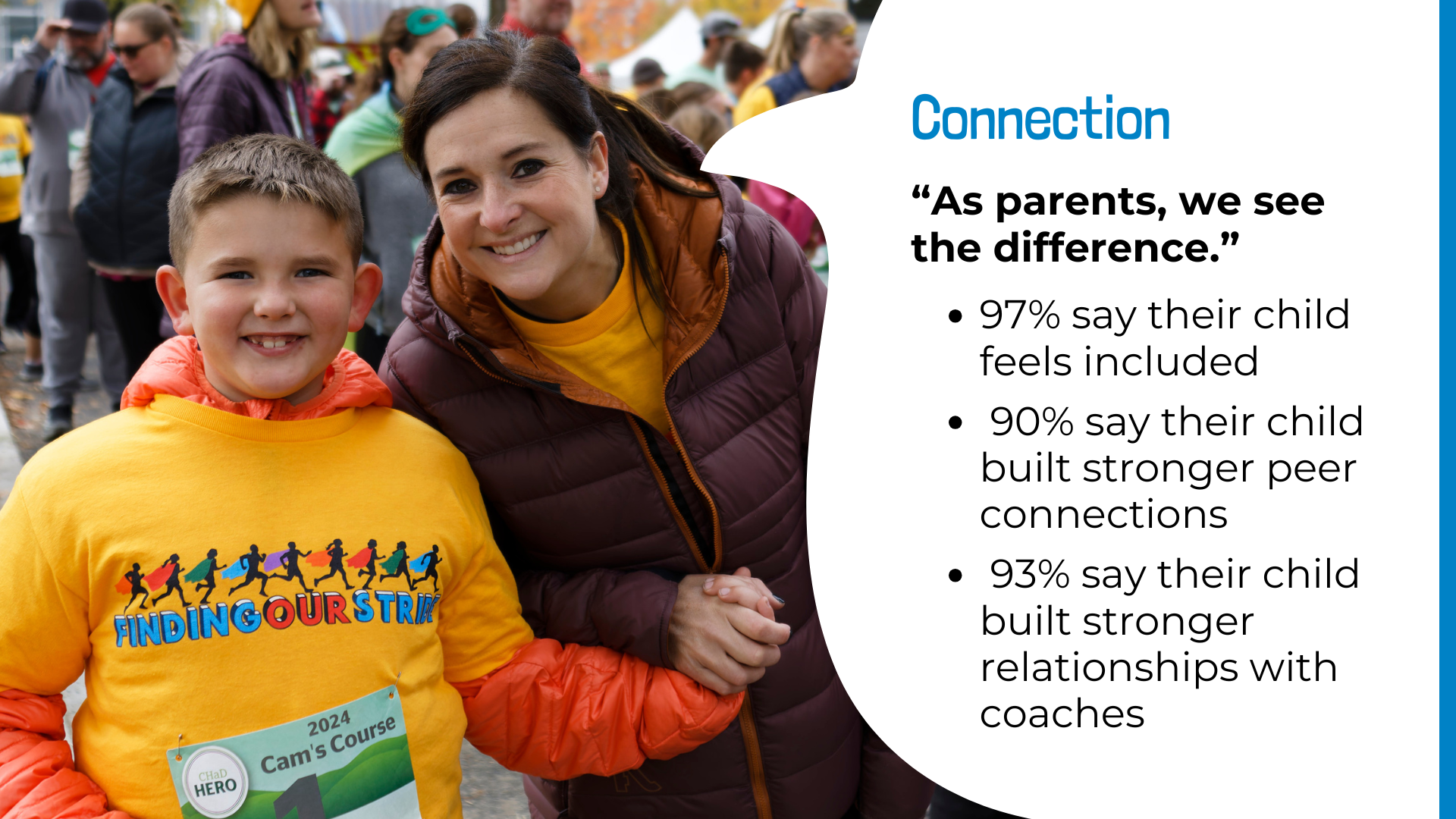
Positive bonds with peers, caring adults, and community. Connection fosters belonging and creates the relational foundation for healthy development.
-
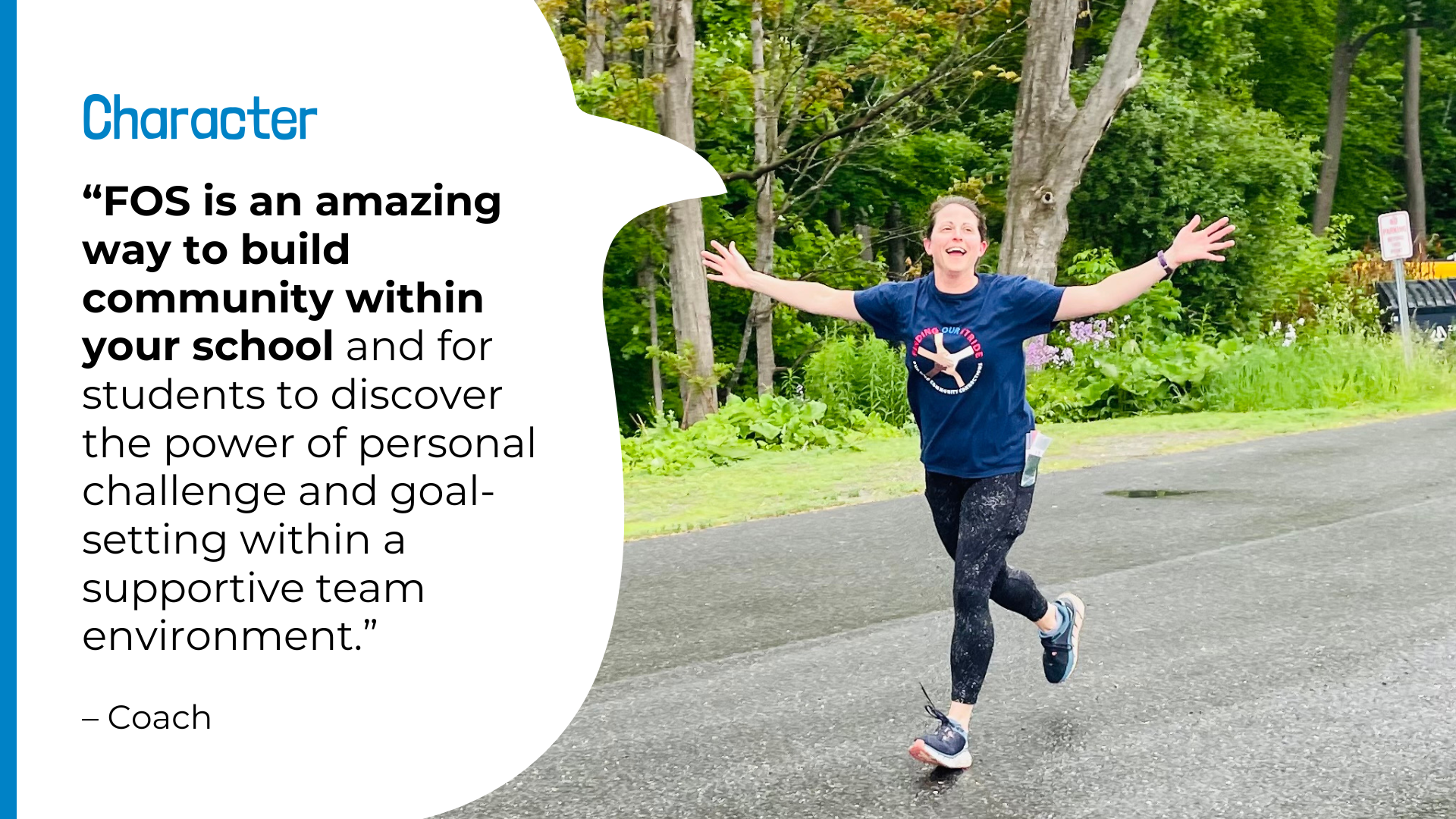
A sense of integrity, responsibility, and commitment to personal values. Character is strengthened through goal-setting, perseverance, and accountability within a team.
-
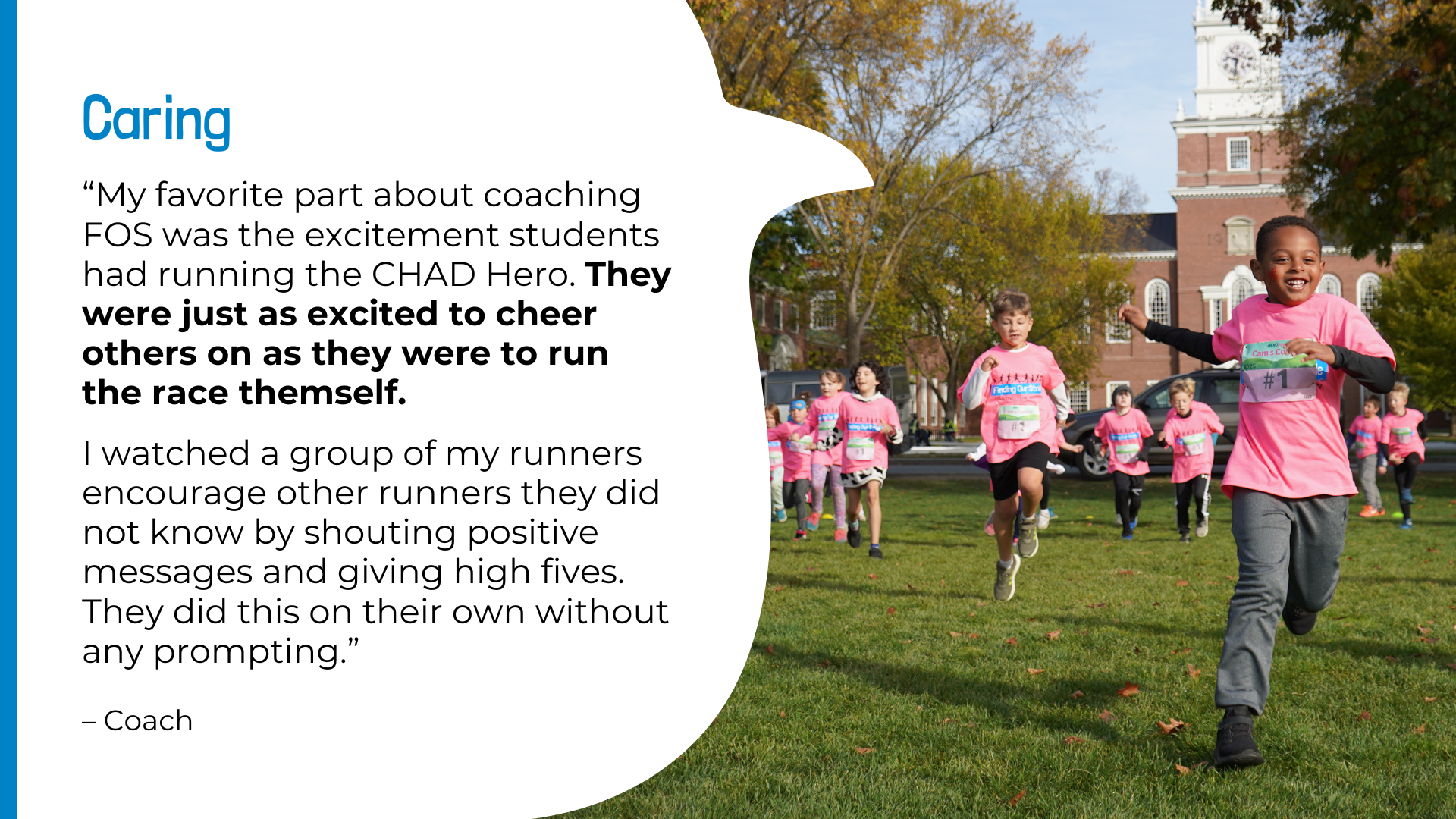
Empathy and concern for others, expressed through kindness and encouragement. Caring grows when youth experience supportive relationships and learn to uplift those around them.
-
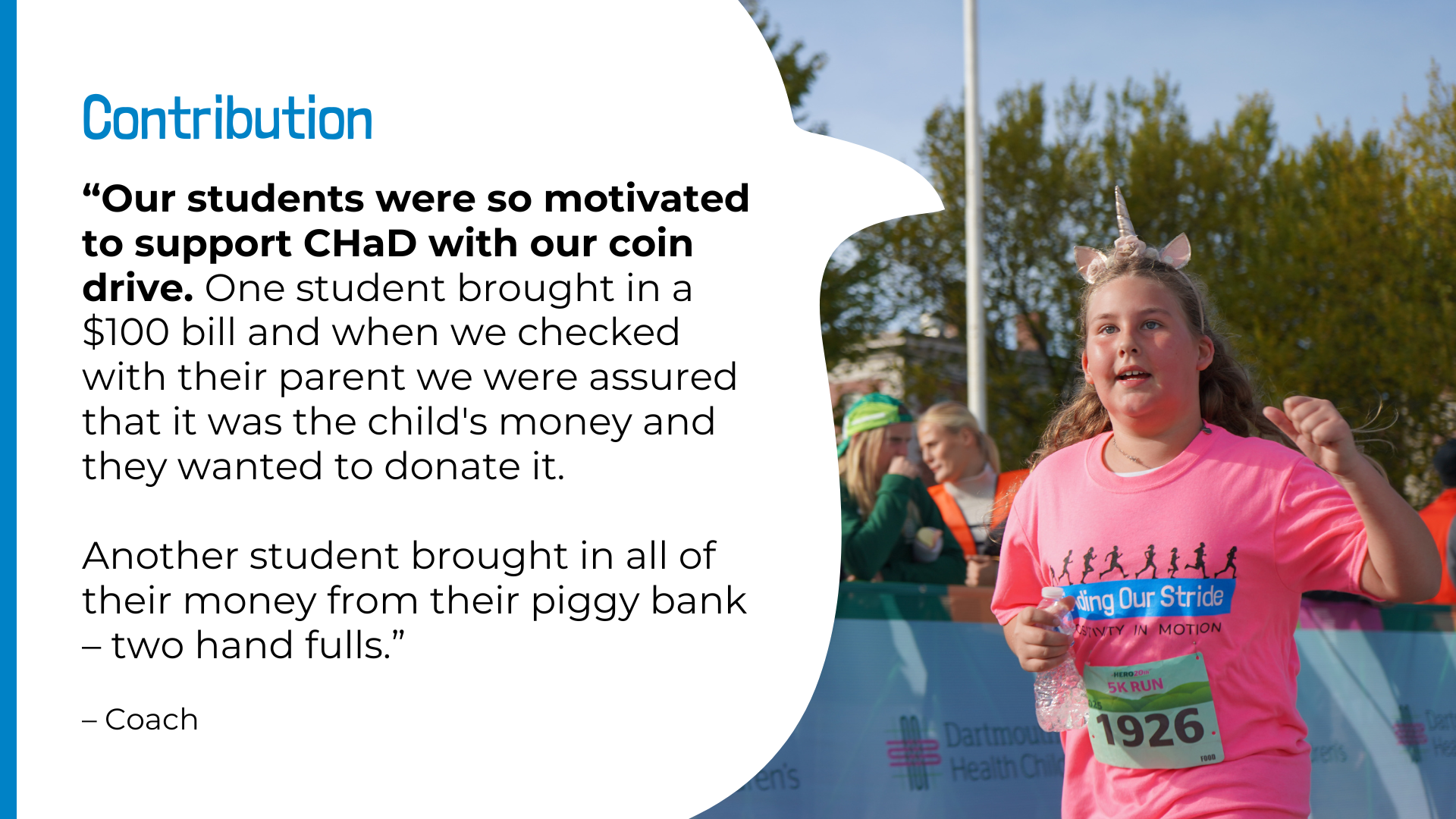
Active, meaningful engagement in family, school, and community. Contribution reflects a young person’s desire to use their strengths to make a positive difference.
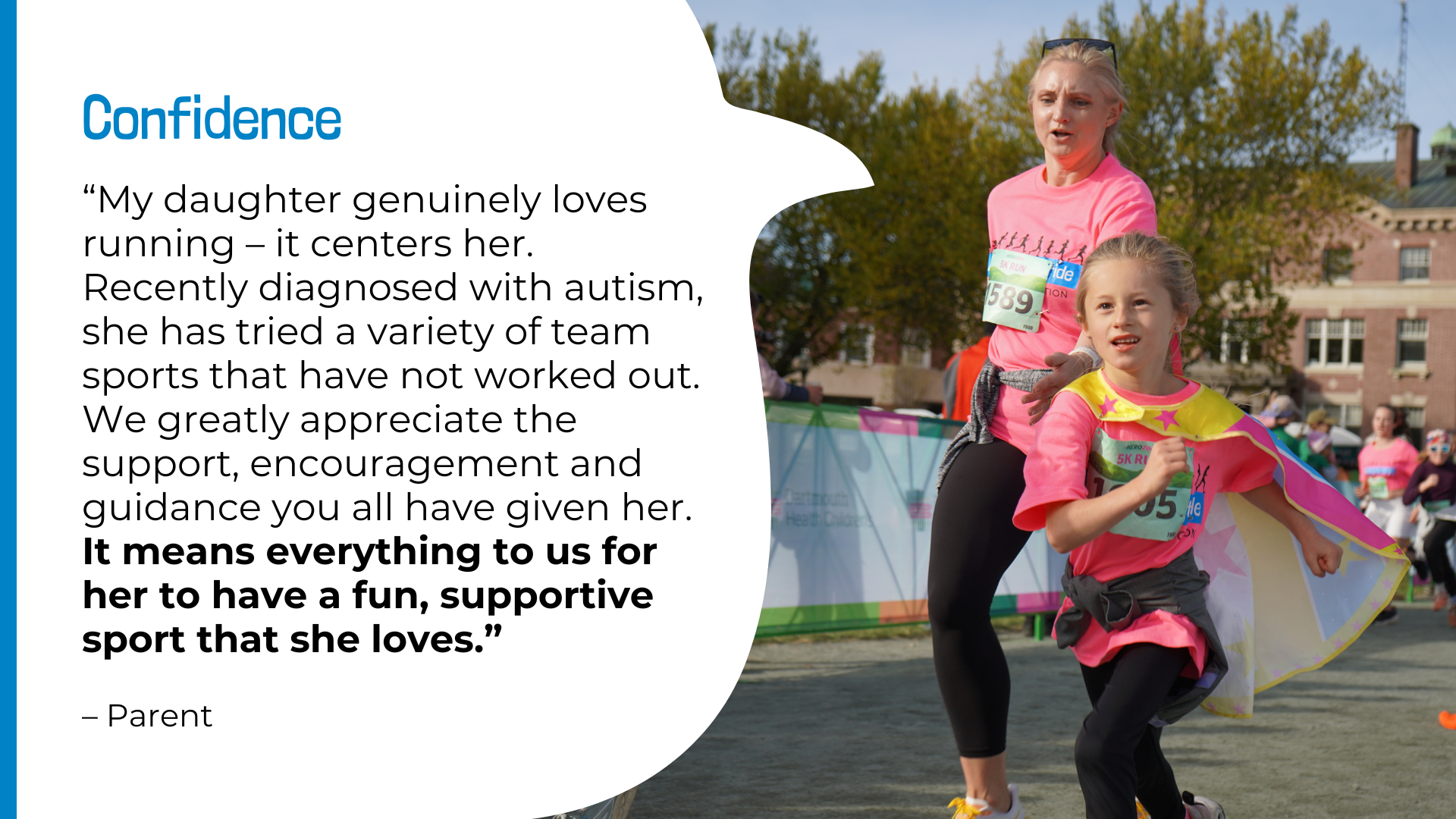
What Changes for Kids Because of FOS
Our evaluation paired with national data
Stronger Mental Health
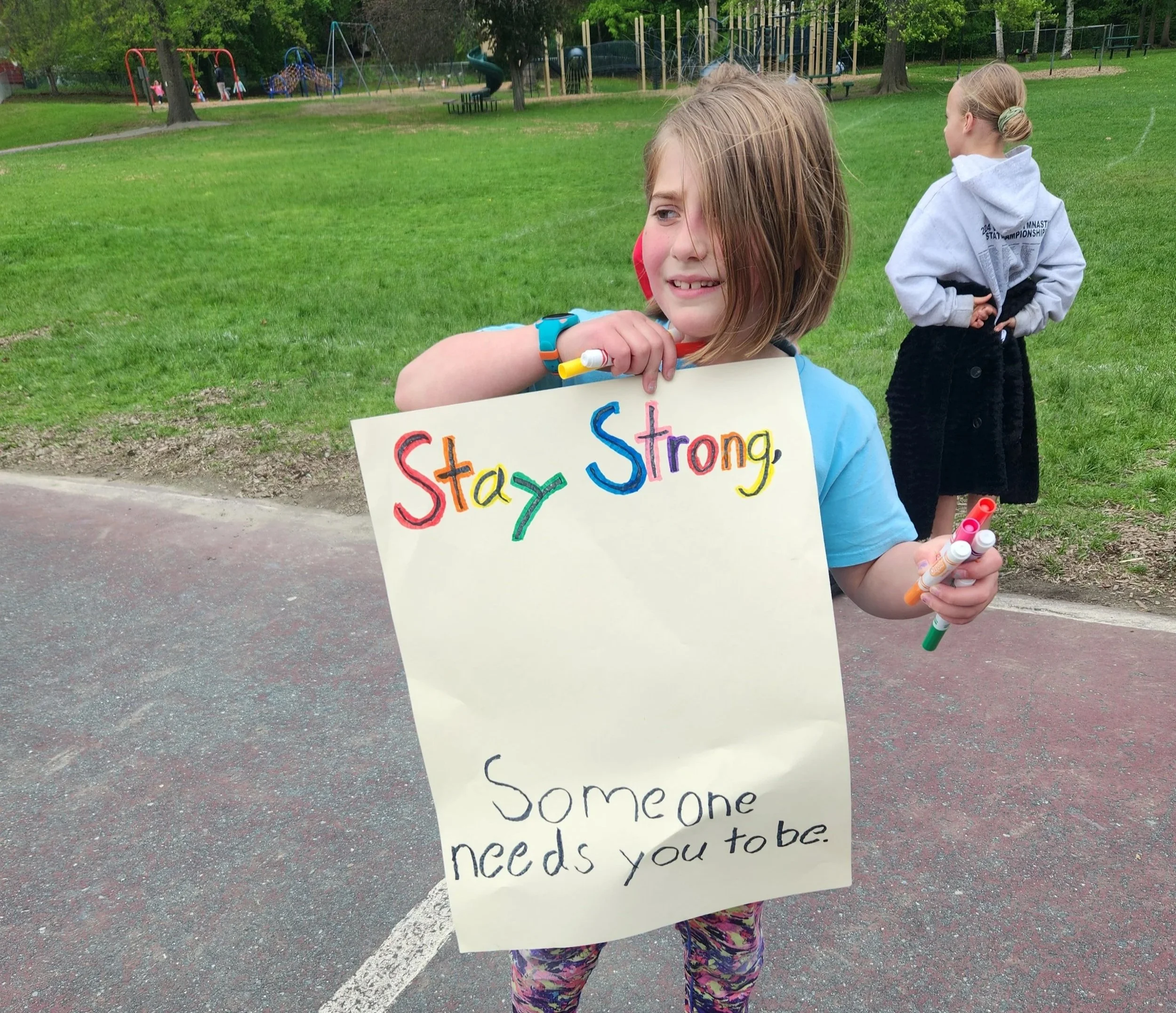
97% of Finding Our Stride runners feel included and welcomed on their team.
Children reporting high levels of connectedness have nearly 50% lower rates of poor mental health
Increased Physical Activity
87% of Finding Our Stride runners continue post-season
On average, runners improve their distance by 20% each season
“Children who are more physically active tend to become healthier, more active adults with lower risks of chronic disease, better mental health, and improved cardiovascular fitness…Consistent, long-term activity habits established in childhood often track into adulthood, preventing obesity and improving overall quality of life.”
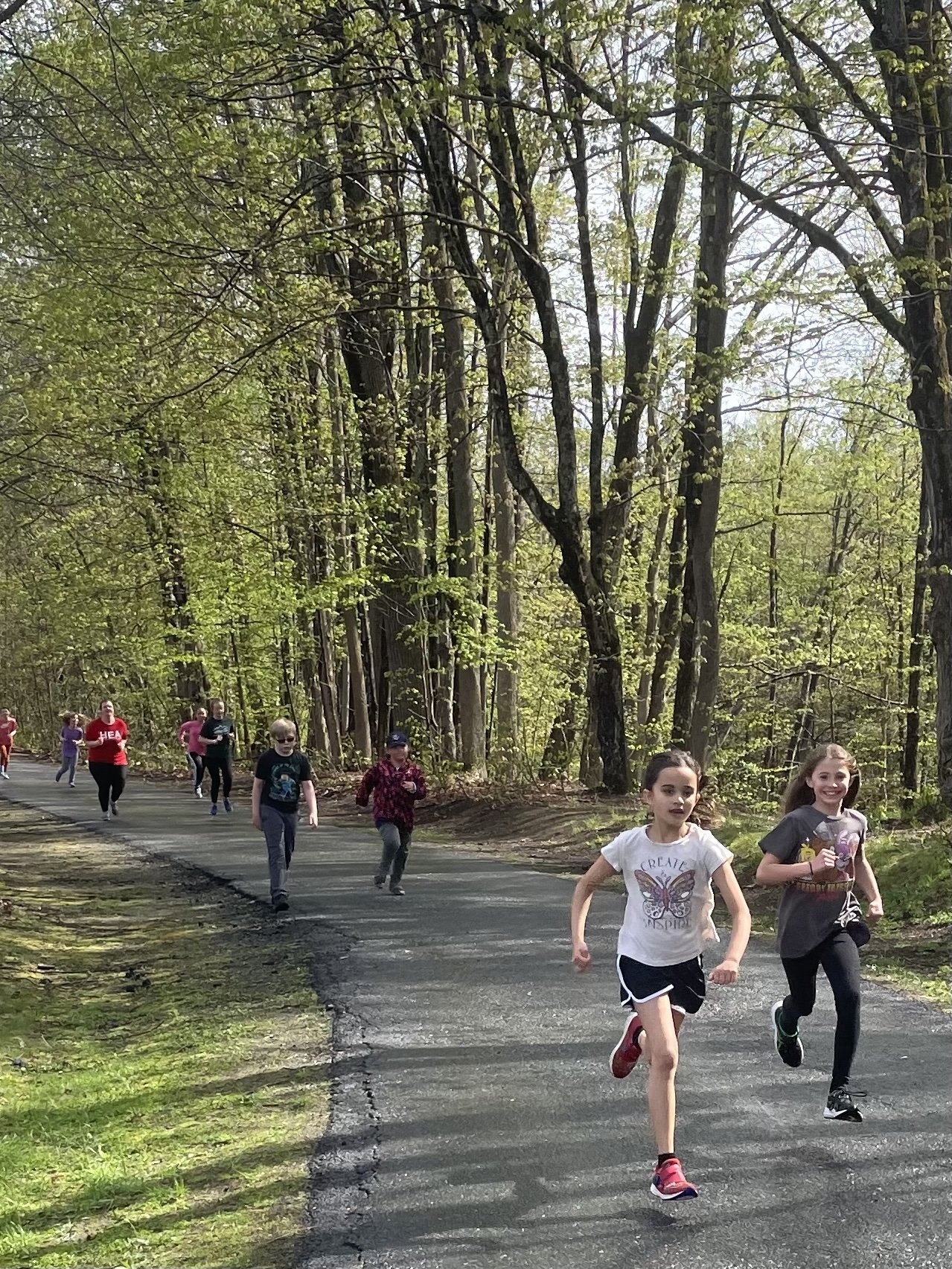
Healthier Choices
90% of parents say that participation in Finding Our Stride strengthened their child’s peer relationships.

Youth with strong peer and family connections are up to 66% less likely to engage in risky health behaviors.
Improved School Success
Finding Our Stride doubles the number of free afterschool programs in the Upper Valley, and is the only free afterschool program available to one third of of participating families.
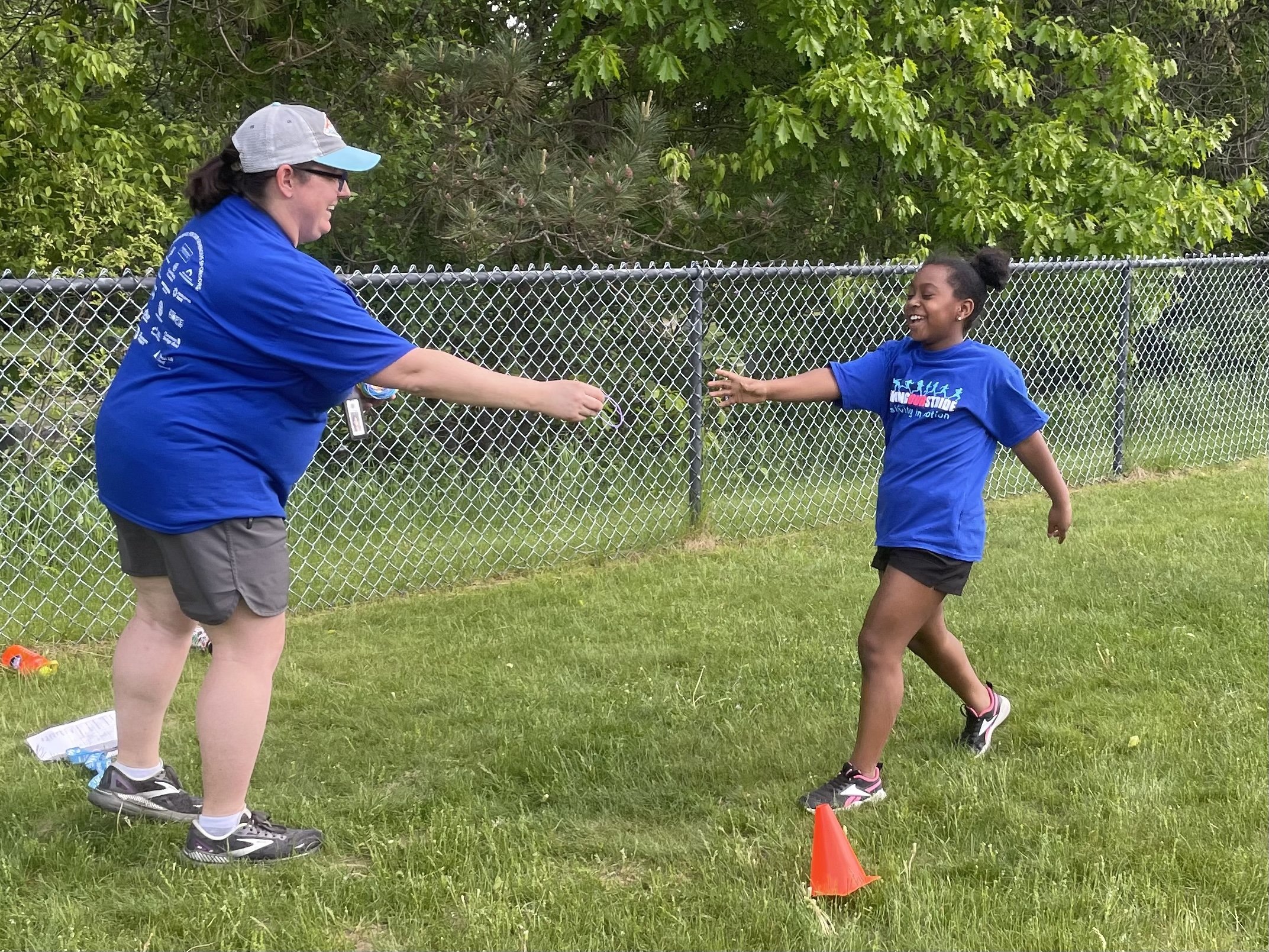
83% of students in afterschool programs report liking school more than their peers. Social-emotional learning improves academic performance by 11 percentile points.
Increased Connection, Agency, and Altruism
80% of Finding Our Stride runners feel more excited to contribute to their community after participating. In the last 15 years, FOS runners and matching funds have contributed $350,000 to local charities!

People who engage in altruistic behavior report better mental health, more positive emotions, and greater resilience to stress.
2025 Community Engagement Highlights
-
![]()
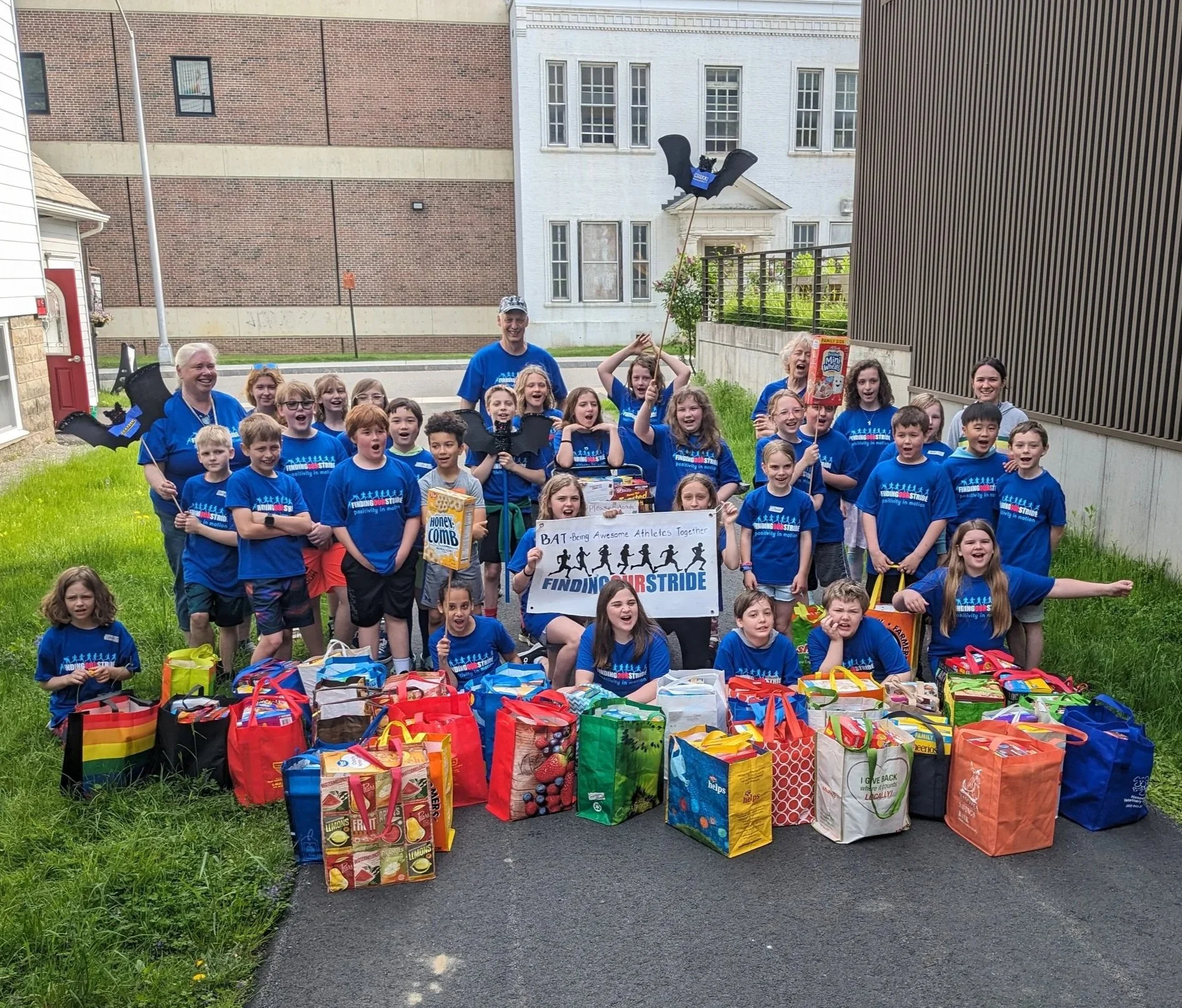
Feeding Our Neighbors
White River School
Runners collected 294 boxes of cereal for the Sharing and Caring Food Pantry. After celebrating at a school-wide assembly, they proudly delivered the donations.
-
![]()
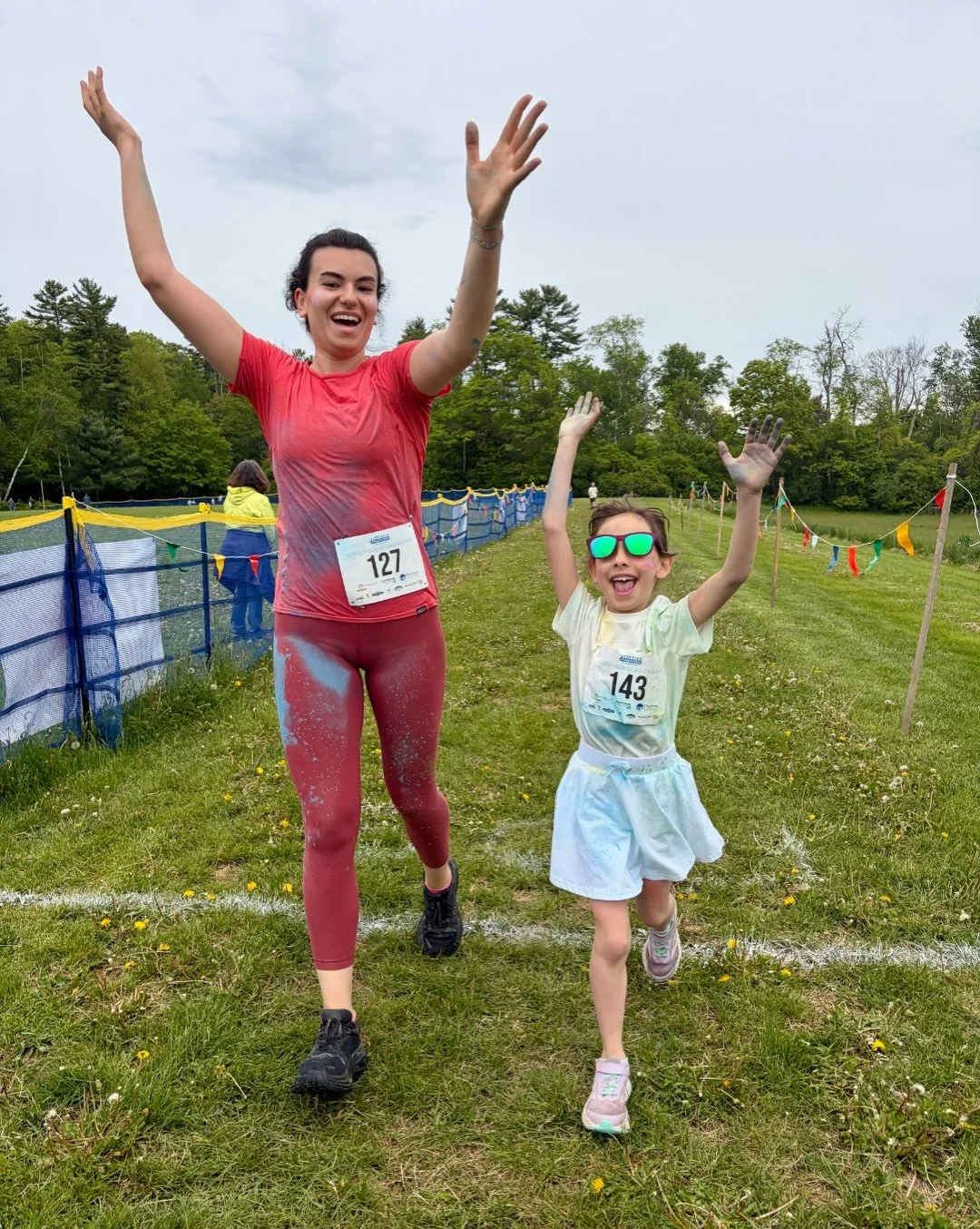
Running for Children’s Health
All FOS Runners, Coaches, and Families
The CHaD HERO brings together more than 500 members of the FOS community each fall to run, cheer, and raise funds for children’s health. Through coin drives, bake sales, and community fundraising, our team has raised more than $250,000 since 2016.
-
![]()
Protecting Local Trails
Piermont, Newbury, Haverhill, and Bradford
Several FOS teams participated in the Race to the Top in Bradford, VT to raise funds for The Friends of Wright’s Mountain.
-
![]()
Expanding Arts Access
Barnard and Sharon
These teams ran in the BarnArts Race Around the Lake to support their local theater and youth arts program. -
![]()
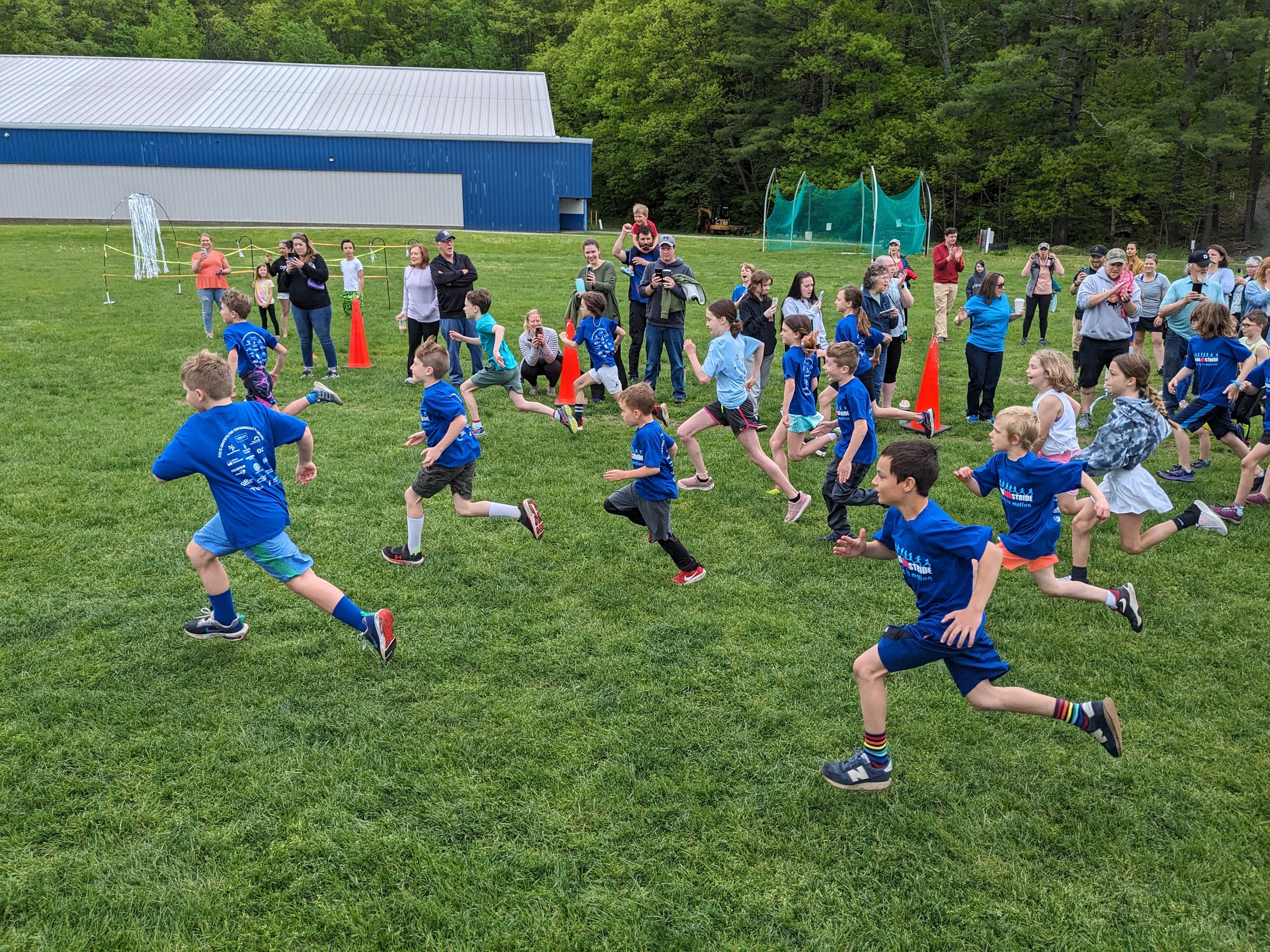
Building Community
Dothan Brook, Hartford, and Ottauquechee
Hartford area schools organized the of season “Hurricane Hustle” where they were cheered on by friends, family, and teammates.


What Your Investment Makes Possible
Children spend roughly 1,200 hours per year in front of screens, with minimal outdoor, unstructured, or nature-based play. But with your investment, in 2025, FOS runners spent a combined 14,000+ hours moving outside with caring coaches and supportive peers.
We are passionate about changing the statistics for youth in the Upper Valley and believe that our program, which is both preventive and holistic, will equip the youth of the Upper Valley to thrive. Finding Our Stride helps to close both the opportunity gap and health disparities, and this is even more important because for every $1 invested in Whole Child programs, there are $11 in benefits.
Invest in a new trajectory for Upper Valley youth!
Stay In Touch
Please follow us on social media, share your contact information, and connect us with your pals! We’d love to keep you posted on our work and continue building community.



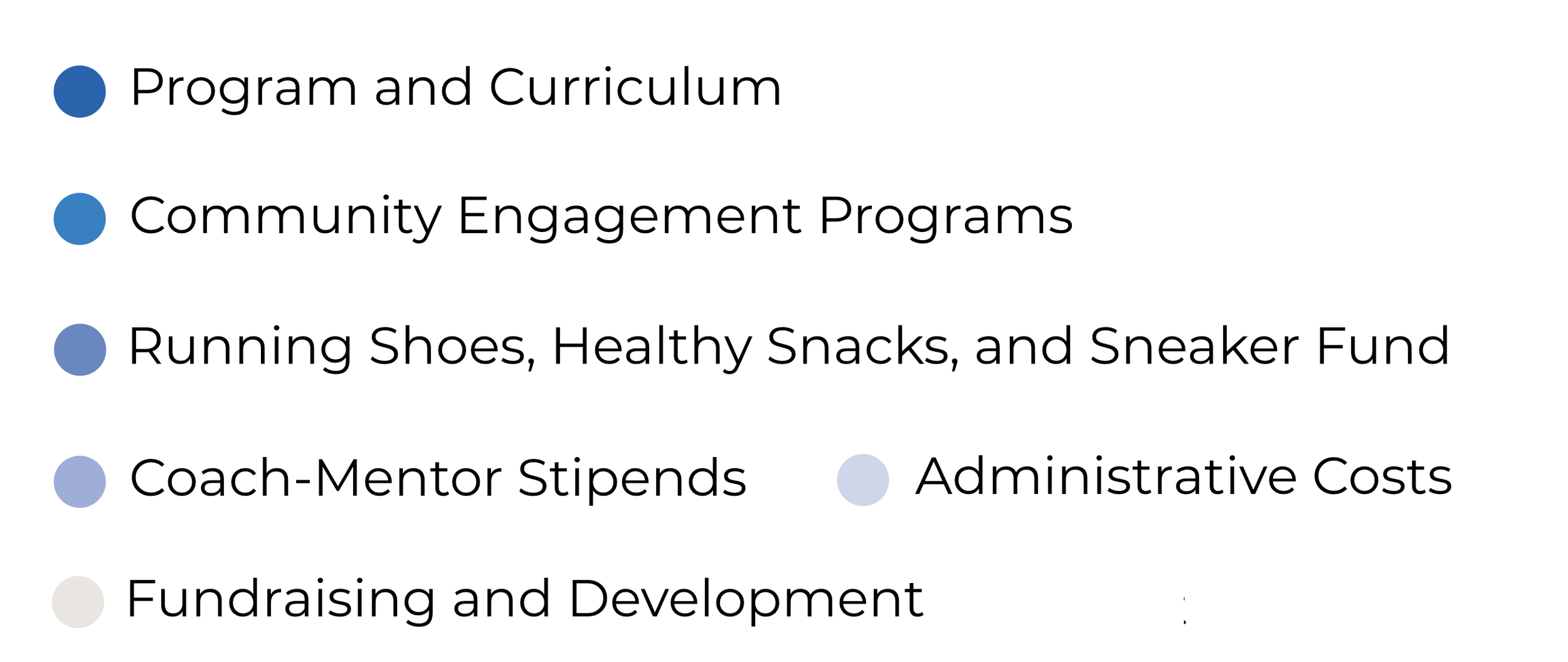
2025 Expenses: $371,582
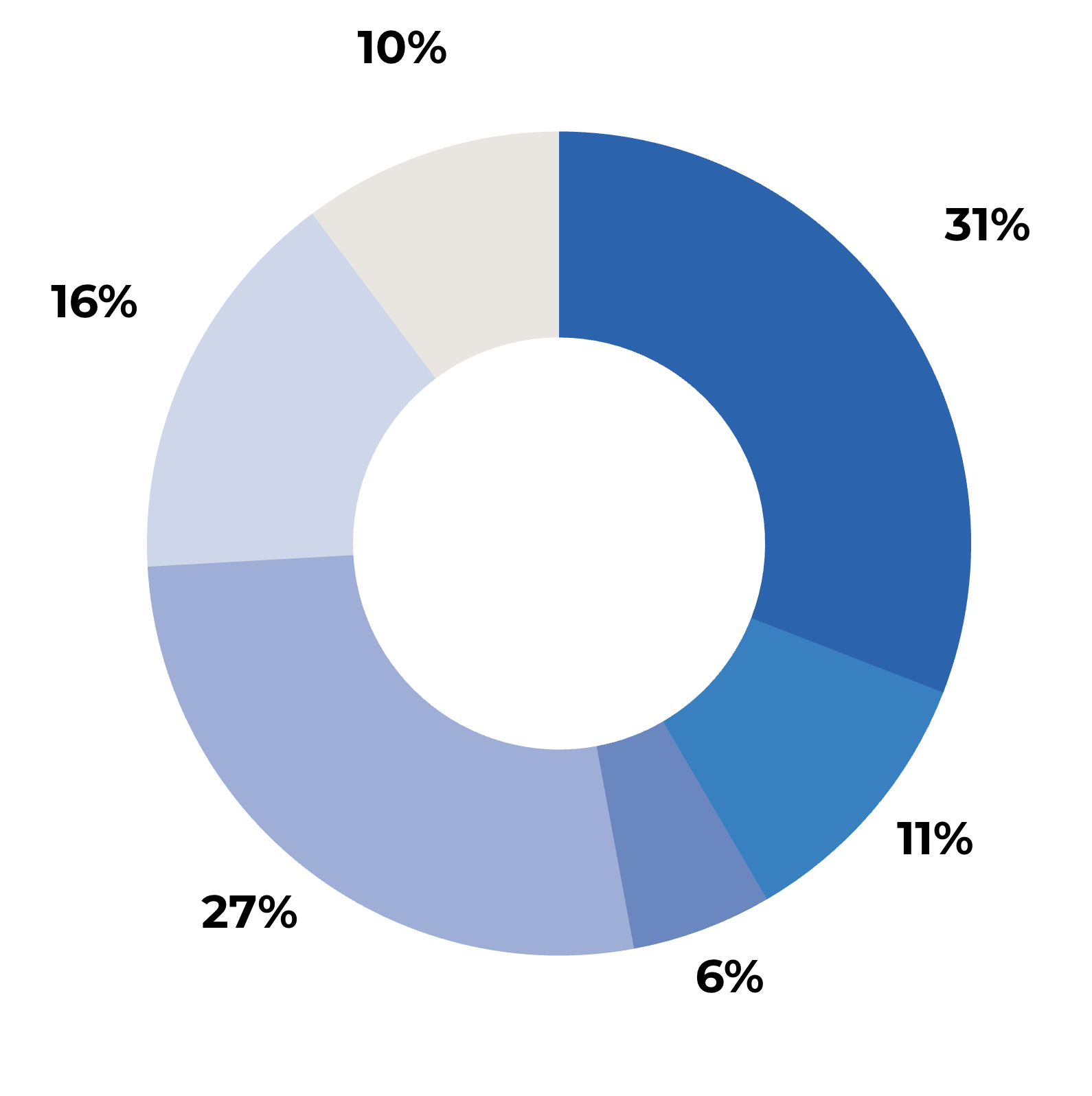
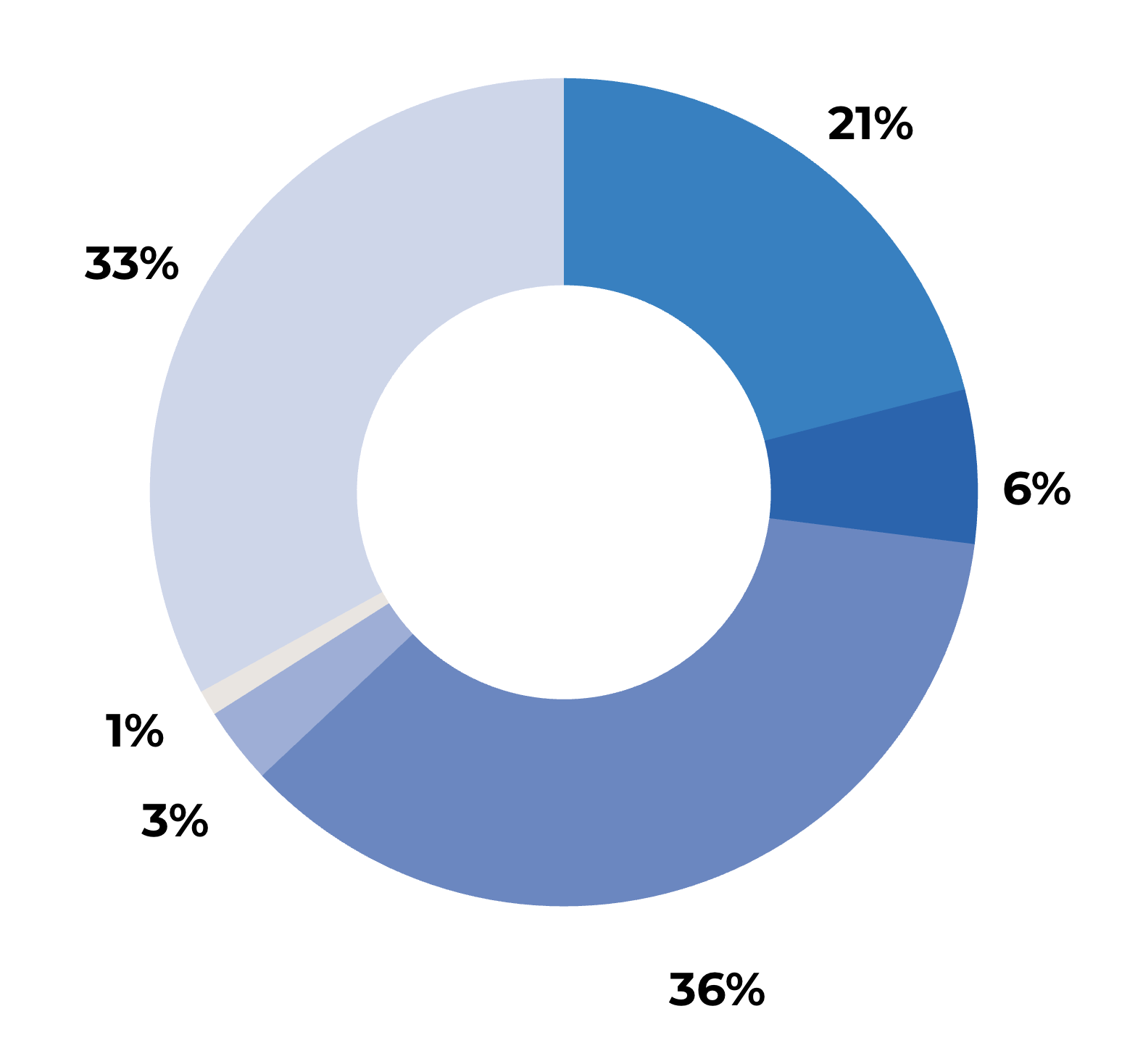
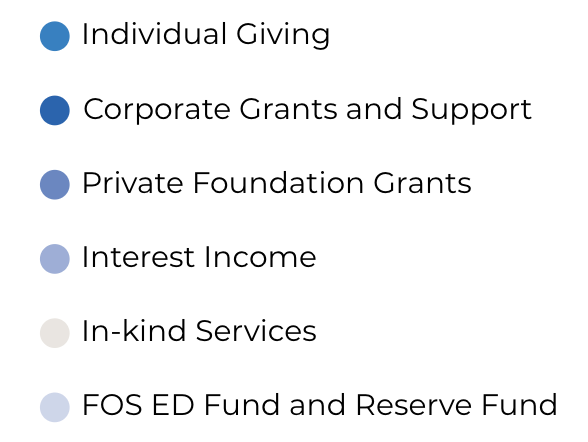
2025 Revenues and Fund Transfers: $371,582
Our Supporters
K. Sandra Anderson and Reeve C. Williams
Valerie Angwin
Nicole Antal
Galen and Heather Archibald
Tim and Heidi Archibald
Alix Ashare
Bruce and Patty Atwood
Roanna Ayers
Jason Barabas and Jennifer Jerit
Barrette Family Fund
Kathleen Barth
Martha and Jim Beattie
Cinny and Steve Bensen
Jay Benson
William Bloom
Lisa Boisvert
Chris and Deb Brien
Stephanie Briggs and Michael Lyons
Doug Britton and Katharine Fisher
Mary & Scott Brown
Peter Burack and Marjorie Becker
Bob Burnham and Kathy Sabadosa
Jill and Martin Butler
Liam Caffrey
Mike and Sasha Cahoon
Megan Campbell
Reid and Sue Campbell
Deborah and Peter Carter
Lisa Cashdan and Peter Stein
Mary Chamberlin
Jennifer Chambers
Lea Chapman
Hannah Corkey
Carolyn and Joe Cravero
Fred & Sophia Crawford
Leslie Dahl
Individuals
Denise Daigle
Julie & Jay Davis
Rick Davis
Greg DeFrancis and Lucy Gibson
Marc DeFrancis
Carole Dempsey
Jessica Donaghe
John Donovan
Marisa Donovan
Sam Drazin
Melissa Duron
Jim and Beckie Eakin
Betsy Eccles
Dave and Lee Emerson
Jane Farrell
Michael Fenzel
Lisa Ferneau
Elisabeth Ferrell and Josh Horan
Molly Finger
Jonathan Frishtick and Holly Glick
Milt and Carolyn Frye
Megan Gagnon
Mac Gardner
Hesslar Gates
Amanda Gillen
Peter Golder
Susan Goodell
Wayne Greenwood
Tricia and Adam Groff
Jennifer Gross and Chris DeFrancis
Deborah Hannam
Kate Harrison
Valerie Hartman
Jeff & Kathy Hastings
Matthew Hayden
Kate Hill
Kelley and Greg Houde
Olive Isaacs and Randall Rodakowski
Jonathan Jolin
Alexis Kanda-Olmstead
Margaret Karagas and Jeremy Stephenson
Jennifer Karr
Jill Kearney Niles
Christine Kidd
Davis and Katie Kitchel
Narasimhan Krishnan
Seetha Lakshmi Subramanian
Jennifer Levy
Jason and Mimi Lichtenstein
George and Dominique Lightbody
Rebecca Lovejoy and Kevin Peterson
Ann and David Malenka
Jill Marshall
Christi-Lynn Martin
Stephanie and Philip McCaull
Tara McGovern
Jeannie McIntyre
Jane McLaughlin
Rob and Sue McLaughry
Pam Merrill
Carolyn and Peter Mertz
Nini and Rob Meyer
Michelle Mierzwik
Ashley and Peter Milliken
Carol Monroe
Bridget Murphy
Daniel Muse and Ann McLean-Muse
Maureen Muse
Amalia Myers
Noelle Family Fund for Health, Well-being, and Enrichment
Ms. Margaret O'Neil
Trish Palao
Simon Parmett
Maggie and John Pepper
Elizabeth Perry
Liz Pierce
Penny Pitou
Todd Pozefsky
Kristin and John Replogle
Laura Rice and Michael F. Wagner
Matt and Margaret Rightmire
Katie & Bill Roach
Katie and Kris Robbins
Rick and Linda Roesch
Lee Rom
Ann and Tim Scheve
Suzanne Schon
Jose Sebastiao
Meg Seely
Allison Shutz Moskow
John Skilling
Kathleen Sloop
David and Laurie Staples
Peter Stern
Edith Thurber
Ben True and Sarah Groff True
Hayden Truell
Kate Van Arman
John Wardrop
Sarah Watson
Peter Welch and Margaret Cheney
Holly Westling and Craig Westling
Bob Wetzel and Brenda Mainer
Elliott Williams
Herb and Lisa Williams
Jennifer and Stan Williams
Lydia Williams
Leslie and Doug Williamson
William Young
Rebecca Zumbach
Private Foundations
Barrette Family Fund
Bio X Cell Fund
The Jack and Dorothy Byrne Foundation
Cabbadetus Fund
Jane B. Cook 1992 Charitable Trust
Couch Family Foundation
The Dobles Foundation
The Lane & Elizabeth C. Dwinell Charitable Trust
Entrepreneurs Fund of New Hampshire
Granite United Way
Leslie S. and Iola M. Hubbard Fund
George W. Mergens Foundation
New Hampshire Charitable Foundation
Dextra Baldwin McGonagle Foundation
Laurance & Mary Rockefeller Fund
The Salmon Foundation
Vermont Children’s Trust Foundation
Vermont Community Foundation
Corporate Supporters
Gallagher, Flynn & Company
Hanover Rotary Club
Hypertherm HOPE Foundation
Mascoma Bank Foundation
New England Wire Technologies
Northwoods Athletics
Von Bargen's Jewelry
Walmart Foundation
White Mountains Insurance
Program Partners
The Positivity Project (curriculum partner)
Stateline Sports (Sneaker Fund partner)
Farm-Way, Inc. (Sneaker Fund partner)
Hubert's Family Outfitters (Sneaker Fund partner)
Our Team
Staff
Greg DeFrancis | Executive Director
Annie Kearney | Director of Development
Becky Zumbach | Program Director and Head Coach
Board of Directors
Matt Rightmire – President | Hanover, NH
Jason Lichtenstein – Vice President | Hanover, NH
Jennifer Karr - Treasurer | Enfield, NH
Mary Brown |Hanover, NH
Lori Bliss Hill | Enfield, NH
Kelley Houde | Newbury, VT
Katie Roach | West Lebanon, NH
Katie Robbins | Hanover, NH
Report Produced By
Elliott Williams | Elliott Mitzi Consulting
Citations
The Challenges Facing Youth Today
1. More than one third of VT and NH teens report persistent sadness or hopelessness.
New Hampshire Department of Health and Human Services. (2023). New Hampshire Youth Risk Behavior Survey results. Concord, NH: Author. Retrieved from dhhs.nh.gov
Vermont Department of Health. (2023). Vermont Youth Risk Behavior Survey results. Burlington, VT: Author. Retrieved from healthvermont.gov
2. In the last two decades, average childhood outdoor time has decreased by an estimated 50%.
Michigan State University Institute for Social Research
Larouche, R., Kleinfeld, M., Charles Rodriguez, U., Hatten, C., Hecker, V., Scott, D. R., Brown, L. M., Onyeso, O. K., Sadia, F., & Shimamura, H. (2023). Determinants of Outdoor Time in Children and Youth: A Systematic Review of Longitudinal and Intervention Studies. International journal of environmental research and public health, 20(2), 1328. doi.org/10.3390/ijerph20021328
3. Rural youth face higher rates of depression, anxiety, suicide and obesity compared to urban peers.
Weir, K. (2025). Unique challenges facing youth in rural communities. American Psychological Association, 56(3). apa.org/monitor/2025/04-05/challenges-rural-youth
HRSA Maternal and Child Health & Johnson, J. A., 3rd, & Johnson, A. M. (2015). Urban-rural differences in childhood and adolescent obesity in the United States: a systematic review and meta-analysis. Childhood obesity (Print), 11(3), 233–241. doi.org/10.1089/chi.2014.0085
4. Less than one-quarter of U.S. youth meet the recommended 60 minutes of daily physical activity, resulting in a "D-" grade for overall activity levels.
Physical Activity Alliance. (2024). The 2024 United States Report Card on Physical Activity for Children and Youth. Washington, DC: Physical Activity Alliance.
5. The average US child spends 7.5 hours a day on screens
American Academy of Child & Adolescent Psychiatry. (2023, August). Screen time and children (Facts for Families No. 54). aacap.org/AACAP/Families_and_Youth/Facts_for_Families/FFF-Guide/Children-And-Watching-TV-054.aspx
What Your Investment Makes Possible
For every $1 invested in Whole Child programs, there are $11 in benefits.
Belfield, C., Bowden, A. B., Klapp, A., Levin, H., Shand, R., & Zander, S. (2015). The economic value of social and emotional learning. Center for Benefit-Cost Studies of Education, Teachers College, Columbia University.
Lerner 5 C’s & definitions-What Helps Young People Thrive
Lerner, R. M. (2009). The positive youth development perspective: Theoretical and empirical bases of a strengths-based approach to adolescent development. In S. J. Lopez & C. R. Snyder (Eds.), Oxford handbook of positive psychology (2nd ed., pp. 149–163). Oxford University Press.
What Changes for Kids Because of FOS
Physical Activity:“Children who are more physically active tend to become healthier, more active adults with lower risks of chronic disease, better mental health, and improved cardiovascular fitness. Consistent, long-term activity habits established in childhood often track into adulthood, preventing obesity and improving overall quality of life. “
World Health Organization. (2024, June 24). Physical activity. World Health Organization. who.int/news-room/fact-sheets/detail/physical-activity#:~:text=Key%20facts,muscles%20that%20requires%20energy%20expenditure
Fruh, S., Williams, S., Hayes, K., Hauff, C., Hudson, G. M., Sittig, S., Graves, R. J., Hall, H., & Barinas, J. (2021). A practical approach to obesity prevention: Healthy home habits. Journal of the American Association of Nurse Practitioners, 33(11), 1055–1065. doi.org/10.1097/JXX.0000000000000556
Healthier Choices: Youth with strong peer and family connections are up to 66% less likely to engage in risky health behaviors, including substance use and violence
Blum, R. W., Lai, J., Martinez, M., & Jessee, C. (2022). Adolescent connectedness: cornerstone for health and wellbeing. BMJ (Clinical research ed.), 379, e069213. doi.org/10.1136/bmj-2021-069213
Improved School Success: 83% of students in afterschool programs report liking school more than their peers
Afterschool Alliance. (2024, September). Evaluating afterschool: The latest research on the impact of afterschool and summer programs. afterschoolalliance.org/documents/The-Latest-Research-on-the-Impact-of-Afterschool-and-Summer-Programs-2024.pdf
And social-emotional learning improves academic performance by 11 percentile points
Durlak, J. A., Weissberg, R. P., Dymnicki, A. B., Taylor, R. D., & Schellinger, K. B. (2011). The impact of enhancing students' social and emotional learning: a meta-analysis of school-based universal interventions. Child development, 82(1), 405–432. doi.org/10.1111/j.1467-8624.2010.01564.x
Altruism: People who engage in altruistic behavior report better mental health, more positive emotions, and greater resilience to stress
Merlo, G., Snellman, L., & Sugden, S. G. (2025). Connectedness: The Updated and Expanded Pillar of Lifestyle Psychiatry and Lifestyle Medicine. American journal of lifestyle medicine, 15598276251345455. Advance online publication. doi.org/10.1177/15598276251345455